
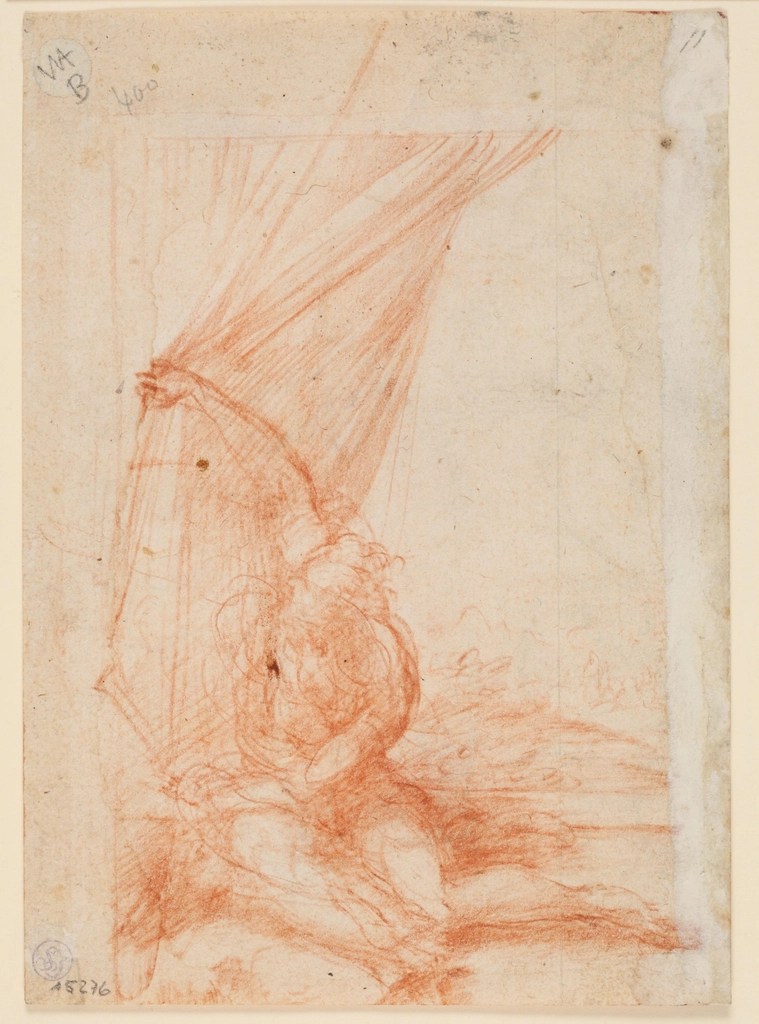
There are ghosts on every stage, though not always the kind that wear sheets or whisper from the wings. Some are the impressions of people who have just left, the traces of a movement that has ended, or the sense of something hovering in the air when light shifts across a wall. As a designer, I have learned that to create presence, one must first understand absence. The stage ghost, for me, is not a specter of superstition but the echo of perception itself, the phenomenon of seeing what is not actually there. To find it, I began looking into Gestalt psychology and the strange poetry of how the human mind completes incomplete forms.
I. The Ghost in Perception
Gestalt theory was born in the early twentieth century, a period of intellectual restlessness when psychologists were trying to explain why we perceive coherent objects instead of isolated fragments of light and shadow. The founders, Max Wertheimer, Kurt Koffka, and Wolfgang Köhler, proposed that perception is not a sum of sensory parts but an organized whole. The word Gestalt itself means “form” or “shape” in German, but it carries a sense of pattern and totality that English cannot fully translate. Their key insight was that the mind imposes structure upon chaos. We do not simply register stimuli, we organize them into meaningful configurations.
The now-familiar Gestalt principles describe how we group and interpret visual elements. We tend to connect things that are close together, complete broken shapes, and perceive continuous lines rather than disjointed fragments. We also instinctively distinguish figure from ground, deciding what stands forward and what recedes. This is the mental choreography that allows us to recognize faces in clouds or meaning in abstraction. In other words, the brain is constantly summoning ghosts.
When I read about these experiments, I see the theatre in them. The empty stage is a blank field, like the white space of a Gestalt diagram. The moment a single figure steps into light, the audience’s mind begins to construct relationships: between figure and space, sound and silence, movement and stillness. The imagination rushes to complete what is unseen. In that instant, the stage becomes a living demonstration of perceptual psychology. The ghost appears because the viewer needs it to.
Gestalt theory was controversial because it rejected the idea that perception could be understood through the reduction of parts. Behaviorists wanted to measure stimulus and response, but Gestalt psychologists insisted on pattern, context, and the irreducibility of form. Their approach aligned more closely with artists than with laboratory scientists. Kandinsky, Klee, and the Bauhaus theorists all absorbed Gestalt ideas, treating visual composition as a balance of forces rather than an arrangement of separate objects. The eye, they believed, seeks unity, and in that seeking lies emotional power.
When I study stage pictures, I find the same logic. A well-composed design is not about the accuracy of props or the realism of architecture; it is about balance, rhythm, and relationship. The audience must perceive the world as whole, even if half of it exists only in suggestion. What Gestalt offered art and design was permission to trust the viewer’s perceptual intelligence. The eye is already searching for completion; our task is to leave space for it to do so.
II. The Modern Mind: Ghosts in the Machine
Contemporary neuroscience has reframed Gestalt theory through what is now known as predictive processing. The brain, scientists argue, is not a passive receiver of data but an active generator of hypotheses about the world. Perception is prediction corrected by error. We do not see the world as it is; we see the world as our brain expects it to be, adjusted slightly when those expectations are wrong. Every moment of perception is a negotiation between memory, imagination, and reality.
In this model, ghosts are not metaphors. They are the natural residue of how perception functions. The mind is always a few milliseconds ahead of the senses, anticipating what will appear. When those expectations are violated, when the brain’s predictions falter, the ghost appears — a flicker, a trace, the shadow of something that might have been. This is why illusions and stagecraft work so powerfully: they exploit the temporal lag between expectation and verification.
Gestalt principles still hold, but predictive neuroscience provides the mechanism behind them. The principle of closure, for example, arises because the brain prefers to confirm its expectations. When a circle is missing a segment, the mind fills it in rather than admit uncertainty. Figure and ground separation emerge from attentional prediction: the mind decides what should be in focus and what should remain background noise. In theatre, we play with these mechanisms constantly. Lighting becomes an act of perceptual guidance, leading the viewer toward what the mind expects to see and away from what it should only sense.
Embodied cognition adds another layer. Perception is shaped not only by visual input but by the body’s position in space. To see is to orient oneself. We perceive distance, scale, and rhythm because our muscles, balance, and breath are involved in the act of looking. This, too, is part of the ghost-making process. The sense of presence we feel when someone enters a room or when light moves across a surface is partly bodily. The air changes, sound shifts, attention tilts. Designers learn to manipulate these cues instinctively, creating what cognitive scientists might call an embodied hallucination of space.
In my own work, this is where the hunt for the stage ghost begins. It is not the apparition itself that interests me, but the neurological condition that allows it to exist. The ghost is a product of prediction and suggestion. When a light fades and the audience believes they still see a figure in the dark, that is not error. It is the completion of perception, the fulfillment of the brain’s pattern-seeking desire.
III. Ghosts in Design: Art, Architecture, and the Poetics of Absence
Gestalt thinking has left its fingerprints across nearly every visual discipline. In painting and photography, artists use negative space to guide attention. The unpainted areas of a composition carry as much weight as the visible forms. Edward Hopper’s interiors, for example, are studies in figure-ground tension: the human subject is often overwhelmed by the surrounding void. The viewer feels what is not seen — the hum of air, the gravity of silence — and that unseen content becomes emotional truth.
Architects, too, design with ghosts. The modernist emphasis on clean lines and open space owes much to Gestalt principles of simplicity and good form. Buildings like Mies van der Rohe’s Farnsworth House or Tadao Ando’s Church of the Light achieve their power not through ornament but through restraint. Their forms rely on the human eye’s ability to interpret minimal cues as coherent structure. Absence becomes presence, void becomes volume.
In more recent architectural practice, the use of transparency and reflection intentionally destabilizes figure and ground. Glass facades mirror their surroundings, causing buildings to disappear into the landscape or refract it in fragmented patterns. The observer becomes part of the composition, seeing both themselves and the world simultaneously. This is Gestalt perception enacted at urban scale: an architecture of simultaneity, where reality and reflection coexist.
Graphic and digital design continue this lineage. Interfaces depend on perceptual grouping and hierarchy. Users must intuit where to look, what belongs together, and what leads to interaction. Every designer is, knowingly or not, applying Gestalt. We create systems that depend on the viewer’s cognitive shortcuts. The most elegant designs appear inevitable because they align with the brain’s predictive grammar. The ghost here is usability itself, the invisible clarity that makes an experience feel natural.
What fascinates me is how these disciplines converge on a shared principle: the manipulation of perception through partial information. In art, architecture, and design, as in life, what is withheld defines what is seen. The power lies in suggestion, in the carefully balanced tension between presence and absence. This aesthetic of incompleteness is where the ghost lives.
IV. The Stage Ghost: Perception in Performance
Theatre is where these ideas come fully alive. The stage is a controlled field of perception, a laboratory of illusion built from light, movement, and sound. It depends entirely on the audience’s willingness to complete the picture. The Gestalt process is not hidden here; it is the performance itself.
Designers have long used perceptual tricks to suggest the unseen. The nineteenth-century technique known as Pepper’s Ghost remains one of the most elegant demonstrations. By reflecting an offstage actor or image onto a transparent surface, the illusion of a spectral figure can appear to hover in mid-air. The magic works not because of complex technology but because of simple Gestalt principles: the eye merges the reflected image with the physical environment, perceiving them as one continuous space. The audience’s mind reconciles the impossible, seeing a coherent ghost where none exists.
Modern scenography extends this into digital realms. Projection mapping, LED surfaces, and holographic effects rely on similar perceptual mechanisms. When an image is cast onto a three-dimensional object, the brain accepts the distortion as motion or transformation. A wall breathes, a costume ripples, a floor becomes water. These effects are not purely technical; they are psychological manipulations that exploit predictive perception. The viewer expects solidity and stillness, so when the surface moves, the mind interprets it as haunting or supernatural.
Light itself can be used to sculpt absence. A single narrow beam cutting through darkness isolates a performer, turning surrounding space into an invisible ocean. When light fades slowly enough, the afterimage lingers in the retina, creating the illusion that the figure remains even after they have stepped away. This physiological ghosting — a literal trace on the sensory system — becomes a tool for narrative and emotion.
Scrims and semi-transparent fabrics further play with figure-ground ambiguity. When lit from the front, they appear opaque; when lit from behind, they become windows. This duality allows designers to reveal or conceal with a single cue, moving characters between worlds without a scene change. The scrim is a material embodiment of Gestalt perception: what is seen depends entirely on where the light falls, on what the brain chooses to foreground.
Sound design contributes its own ghosts. A whisper without a visible source, a footstep from behind the audience, a faint resonance that persists after a scene ends — all invite the listener’s predictive machinery to imagine a body that is not present. The brain, desperate to locate cause, fabricates presence. The ghost is born not from technology but from expectation.
In my own designs, I find that the most haunting effects come from restraint. The stage ghost should never appear complete. It must be caught in the corner of vision, half-seen and half-imagined. When audiences lean forward, trying to discern whether they saw something move, that is the moment of success. Their perception has become part of the performance. The ghost exists only because they seek it.
This approach to design treats perception as collaboration. The audience provides the missing data; the designer provides the invitation. The border between real and imagined becomes porous. Every flicker of light, every shadow, every pause becomes a perceptual event. In this sense, the theatre is the natural home of Gestalt thought. It is an art of completion, a ritual in which the mind’s hunger for unity is both satisfied and unsettled.
V. Chasing Ghosts
To chase ghosts through Gestalt is to study the interface between mind and world, between what is there and what we believe is there. It is an act of faith in perception, and also a quiet acknowledgment of its fragility. We see patterns because we need them. We find meaning in emptiness because emptiness terrifies us. The ghost, in all its forms, is a symbol of continuity — the assurance that something endures beyond the visible.
In design, this pursuit becomes practical. The ghost teaches us restraint, the value of suggestion, the power of negative space. It reminds us that what is absent can be as communicative as what is present. Whether we are arranging light on a stage, shaping a façade, or composing an image, we are mediating between reality and perception, creating structures that invite completion.
When I walk through an empty theatre after a show, the light still faintly warm on the walls, I often think about how perception lingers. The audience is gone, the sound has faded, but the space holds a residue of attention. Perhaps the ghosts we chase are not illusions at all but the traces of our own looking, the afterimages of meaning we leave behind. To design is to summon and to release them, again and again, until the stage feels alive with things unseen.
Endnotes
- Wertheimer, Max. “Laws of Organization in Perceptual Forms.” Psychologische Forschung (1923).
- Köhler, Wolfgang. Gestalt Psychology. Liveright, 1947.
- Friston, Karl. “The Free-Energy Principle: A Unified Brain Theory.” Nature Reviews Neuroscience 11 (2010).
- Clark, Andy. Surfing Uncertainty: Prediction, Action, and the Embodied Mind. Oxford University Press, 2016.
- Arnheim, Rudolf. Art and Visual Perception. University of California Press, 1954.
- Pallasmaa, Juhani. The Eyes of the Skin: Architecture and the Senses. Wiley, 2005.
- Rasmussen, Steen Eiler. Experiencing Architecture. MIT Press, 1959.
- Wilkins, David. “Light, Memory, and Perception in Contemporary Scenography.” Theatre Design & Technology (2019).
Questions for Reflection and Dialogue
- When you enter a space — on stage, in a gallery, or even in your own home — have you ever felt a presence that wasn’t physically there? What do you think your mind was completing for you in that moment?
- Which illusions or absences in design, architecture, or art have made the strongest impression on you, and why do you think your brain filled in the gaps?
- In theatre, how much of a performance’s impact do you think comes from what is not shown versus what is fully visible? Can you recall a scene where suggestion or absence felt more powerful than action?
- How do you interpret the idea of a “stage ghost” in your own creative or professional work? Could absence or negative space be a tool for storytelling in your practice?
- If you were asked to design a ghost for a space — physical or digital — what sensory elements would you use to make it feel real without being fully present?
 Anamorphique